
A dining table is the heart of a family home. It is where breakfasts are rushed through on school mornings, where newspapers are read at the weekend, where children draw, where homework gets done, and where the best conversations of the week unfold over a shared meal. So, when a customer asked us to transform their solid oak table, we were delighted to take it on.
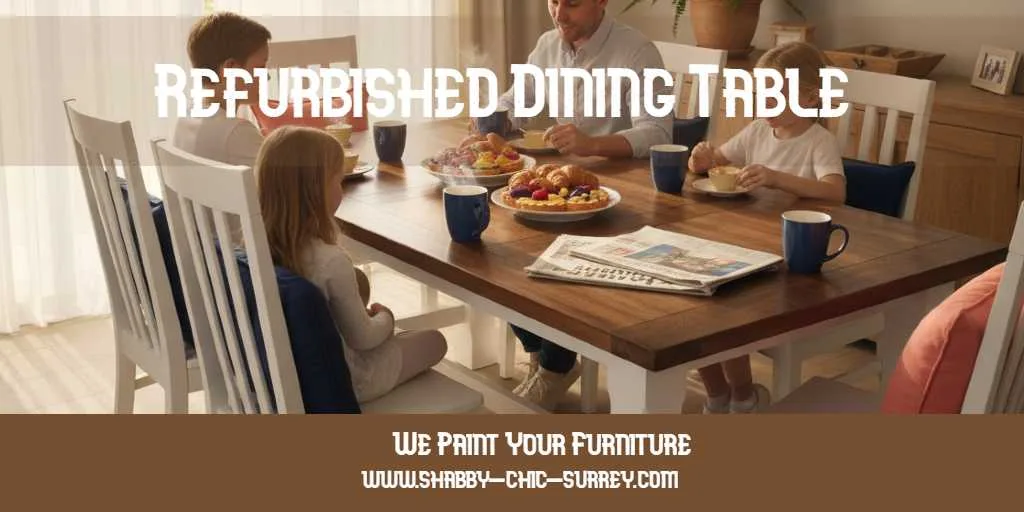
Refurbished Dining Table is Set for Breakfast
The brief was a two-tone finish—crisp white on the chassis and legs, with a richly dyed dark wood top designed to tie in with another piece of furniture already in the room. Done well, it gives a table real presence: the softness and brightness of painted white below, the warmth and depth of timber above. Here is how we did it.
The Piece: A Solid Oak Table
The table arrived at the workshop in the kind of condition that tells you straight away it has been built to last. A proper piece of oak construction—rectangular, generously proportioned, sturdy as anything and, as we quickly discovered, very heavy indeed.
The design is classic and family-friendly: a plain rectangular top supported by a substantial apron and four square, tapered legs. No fuss, no fashionable flourishes—just honest oak, beautifully made.
Fortunately, the top was not permanently fixed to the base. Thus we managed to lift it away from the chassis. And that made the job ahead much more manageable. Sanding a tabletop in situ is possible, but sanding it on its own is far simpler.
The Process: Step by Step
List of Steps
Sanding
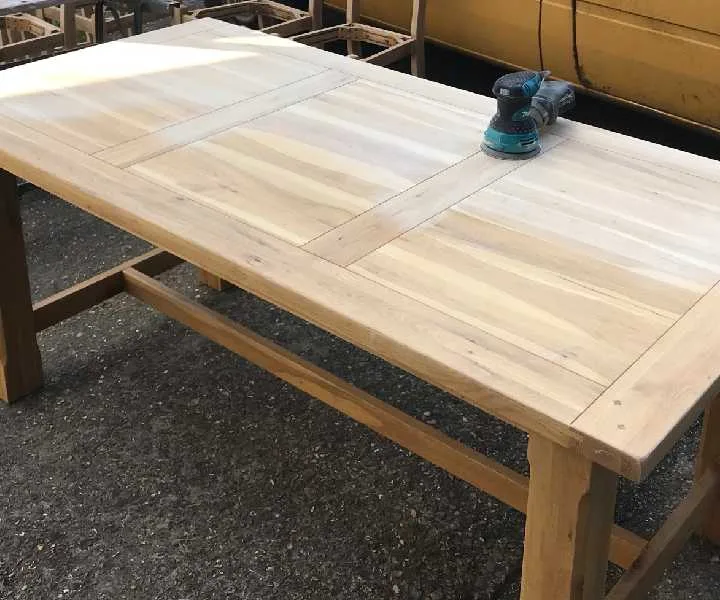
We sanded the tabletop outside, keeping the dust away from the painting workshop. Starting with a medium grit to cut through the existing finish and flatten out any dents or ring marks, we worked through progressively finer papers until the oak was smooth.
After sanding we vacuumed and wiped with a tack cloth to lift every last speck of dust.
Sanding the Dining Table
We used mechanical sanding for the flat surfaces and hand sanding for the table chassis and legs.
Wood Dyeing
With the oak bare, clean and smooth, we moved on to the colour. The customer had chosen a deep, dark shade to match an existing piece of furniture in their dining room.
We applied the wood dye generously and evenly into the grain, wiping off the excess to prevent patchy drying.
Once fully dry, we sealed the tabletop with Rocktop matt varnish from Smith and Rodger. It's a hard-wearing, water-based wood varnish that goes on very smoothly and gives great results.
Sanding the Table Chassis/Legs
We sanded the entire chassis and all four legs with medium-grit sandpaper to break up the existing finish and give the primer a good surface to grip.
Then we wiped everything clean with a tack cloth before we started the painting.
Priming
Oak is a tannin-rich timber, and tannins have a habit of bleeding through a white paint finish. To prevent that, we applied a specialist stain-blocking primer across the entire chassis and legs, Zinsser BIN. This sealed the wood, blocked the tannins and created a flawless base for the topcoat.
Decorative Paint
The paint choice for this project was a Dulux eggshell that we mixed with the Farrow and Ball colour, Wimborne White.
We applied several coats of paint by hand with a roller and brush. Spray painting such large and heavy pieces of furniture is just not manageable in our workshop!
Assembling Everything
Once we had finished the painting and wood dyeing, we brought the two halves of the table back together. We lowered the top onto the chassis and secured from underneath Complete and transformed.
The two-tone look is one of our favourite kinds of project and it's always a firm favourite with our customers as well. When you want to refurbish your furniture, give it a new look or refresh a tabletop, then please don't hesitate to get in touch. Because we can paint your furniture.
Let's Get In Touch
Contact Details
When it takes sanding, painting, varnishing or waxing to get there, give us a call if you've got furniture that needs a transformation.
Phone Number
07351 101851
Email Address
furniture@shabby-chic-surrey.com